Duration
Weekly two-hour sessions over six weeks
Location
Online via Zoom
Date and time
6.30–8.30 p.m. weekly on Wednesday evenings, 14 October to 18 November
Level
All experience levels welcome
Course Summary
What is the most honest way to write about the landscape? What is nostalgia’s place in rural writing? How does the rural writer move beyond and complicate conventional themes such as native vs. newcomer, tradition vs. change and landscape as a green pastoral space? This will be a course about the craft of writing fiction and nonfiction, looking at specific techniques and then discussing how these elements apply particularly to writing about rural subjects. In addition to considering concepts such as character development, narrator as character in nonfiction, writing about physical environments, working the central question/conflict and other craft-based aspects of writing, we’ll explore the most accurate and genuine ways to apply these concepts to defining the rural experience.
Course Outline
Writing the Rural will combine lecturing, exercises, small group discussions and close reading of volunteers’ work. The following is the anticipated breakdown of content for the course.
Week 1: Defining the Rural
We’ll consider the tradition we’re writing into, where it has failed or succeeded, and what forms may be best-suited to consideration of rurality in a modern context. We’ll also explore important pitfalls to avoid when writing about rural subjects.
Week 2: The Rural Character
In the first half of the class we’ll focus on characterisation in fiction, bringing in both general considerations and those specific to a character from the countryside. The second half of the class will build on this to consider how the “I” is characterised in creative nonfiction.
Week 3: Scene and Environment
While studying the representation of setting, we’ll also tackle pacing and the potential to reach greater impact by ‘showing’ instead of ‘telling’ how a character interacts with their space.
Week 4: Dialogue
We’ll look at the mechanics and content of dialogue, relevant to both fiction and non-fiction, as well as at how to avoid certain clichés associated with rural characters.
Week 5: Nuts and Bolts in the Writer’s Tool Bag
We’ll consider how best to use (or not use) interior monologue, how to choose a point of view, and how to use narrative distance to achieve certain effects.
Week 6: Workshop Techniques
In our last meeting, we’ll discuss how best to set up workshops outside of the class, as well as conducting a sample workshop of work put forward by participants. (In a small class, there may be opportunity for everyone’s work to be workshopped. Should more work be volunteered than can be workshopped within the time available, pieces will be selected at random.)
Course Outcomes
By the end of the course, participants will be equipped to significantly improve their short stories or essays in the editing process, particularly when writing about rural characters, environments or experiences. They will also be equipped to create their own workshops and networks of mutual support with fellow writers beyond the confines of the course.
About the Facilitator
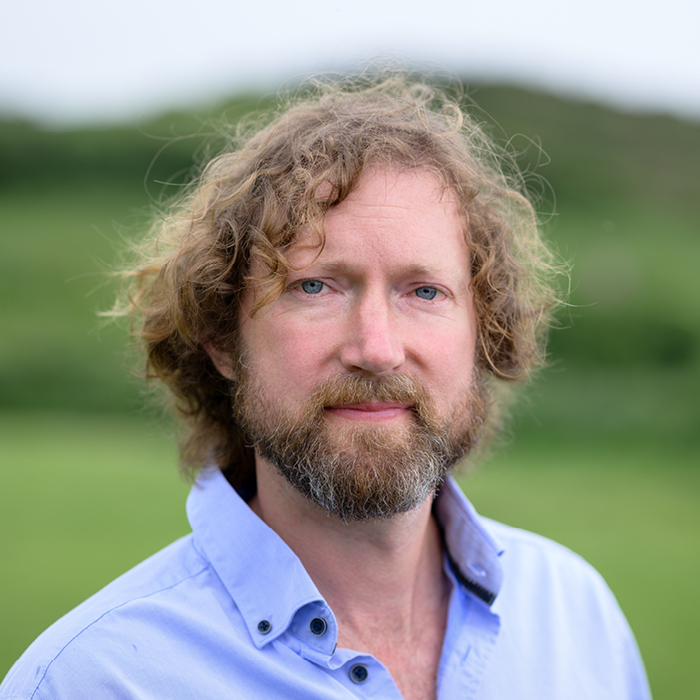
Ryan Dennis is the author of the novel The Beasts They Turned Away, published by époque press in 2021 and longlisted for the Republic of Consciousness Prize, as well as the memoir Barn Gothic: Three Generations and the Death of the Family Dairy Farm (Island Press, 2025). His shorter work has appeared in various literary journals and he is a syndicated columnist for agricultural print periodicals in four countries and two languages. He is also a Fulbright alumnus and PhD in creative writing, and has taught at the University of Education Schwäbisch Gmünd, National University of Ireland Galway, Maynooth University and University College Dublin. In 2020 he founded The Milk House, an initiative to showcase the work of those writing on rural subjects in order to help them find greater audiences. With other volunteers from The Milk House, Ryan edits and publishes the Best in Rural Writing anthology series. He currently lives in Galway.